
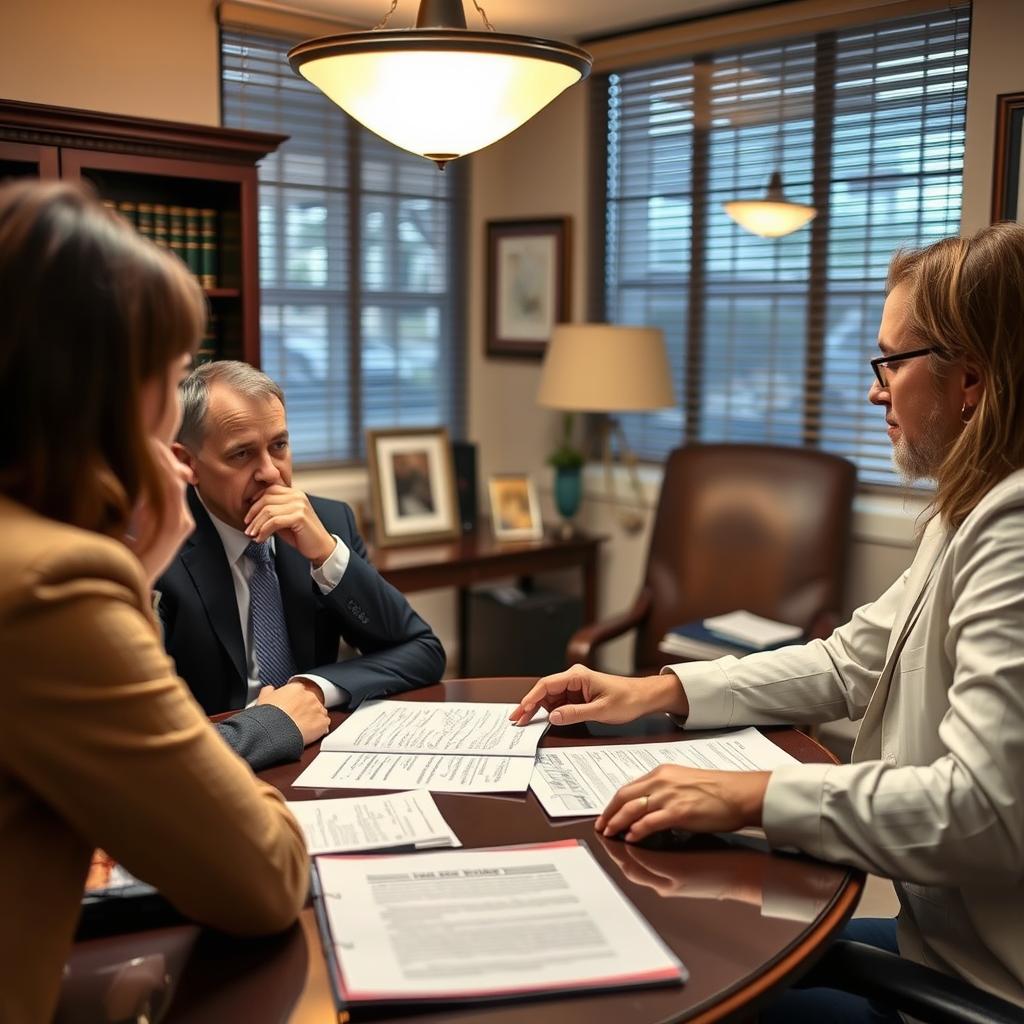
Refusal Lawyer James City County, VA
You were driving along I-64 through James City County when a police officer pulled you over. After a series of questions, the officer asked you to take a breath test, and you refused. Now you face serious consequences under Virginia’s implied consent law. A refusal charge can trigger an automatic one‑year license suspension, and if you have a prior DUI or refusal within ten years, it can escalate to a criminal misdemeanor. If you are looking for a Refusal Lawyer James City County, VA, the attorneys at Law Offices Of SRIS, P.C. can help. The firm, founded in 1997, represents clients in traffic matters throughout Virginia. Your refusal case will be heard at the Williamsburg/James City County General District Court, located at 5201 Monticello Ave, Suite 4, Williamsburg, VA 23188. Law Offices Of SRIS, P.C. serves clients in James City County from its Richmond location at 7400 Beaufont Springs Drive, Suite 300, Room 395, Richmond, VA 23225. Call (888) 437-7747 to schedule a consultation. Law Offices Of SRIS, P.C. — Advocacy Without Borders.
What Refusal Means in James City County
Under Virginia Code § 18.2-268.3, any person arrested for driving under the influence is deemed to have given implied consent to a chemical test of their breath or blood. An unreasonable refusal to submit to that test carries significant consequences. A first‑offense refusal is a civil violation that results in a one‑year license suspension. A second refusal within ten years is a Class 2 misdemeanor, and a third or subsequent refusal is a Class 1 misdemeanor, which can carry jail time and a fine of up to $2,500. At the Williamsburg/James City County General District Court, a judge—not a jury—hears the case. The Commonwealth must prove the refusal beyond a reasonable doubt if the charge is criminal, and an experienced attorney can examine whether the officer properly advised you of the implied‑consent law and whether the refusal was truly unreasonable.
James City County, home to Williamsburg and the College of William & Mary, sees steady traffic enforcement along I‑64, Route 199, and Route 60. Law enforcement officers in this Ninth Judicial District are familiar with Virginia’s refusal statute, and the local court follows established procedures for handling these matters. Mr. Sris and his Of Counsel team understand the court’s practices and work to protect your driving privileges, minimize points on your DMV record, and avoid a criminal record whenever possible.
How Mr. Sris and His Of Counsel Handle Refusal Cases
When a refusal charge lands in court, the attorney’s first step is frequently a close review of the traffic stop. Was the initial stop supported by reasonable suspicion? Were the implied‑consent warnings given accurately and in a language the driver could understand? Did the officer note any medical or physical reason why a breath test might have been refused? Mr. Sris and his Of Counsel assess all of these factors to determine whether the refusal can be challenged on procedural grounds. If the evidence supports a defense, they may argue for dismissal or seek to negotiate a resolution with the Commonwealth’s Attorney that avoids a license suspension or criminal penalty.
Because a refusal conviction can affect your driving privileges, employment, and insurance rates, the team approaches each case with a focus on the long‑term consequences. They can also advise you on any potential impact a refusal finding may have on a companion DUI charge, and on the steps that might later be needed to restore your driving privileges. Throughout the process, Mr. Sris and his Of Counsel keep you informed and work toward the most favorable outcome possible under the specific facts of your case. Results may vary. Every matter is unique.
About Mr. Sris and His Of Counsel Team
Mr. Sris, Owner and Founder of Law Offices Of SRIS, P.C., is a former prosecutor. Admitted in Virginia, Maryland, the District of Columbia, New Jersey, and New York, he has practiced since 1997 and brings extensive courtroom experience to every traffic and criminal matter. Mr. Sris testified before the Virginia House Courts of Justice Committee in support of 2019 HB 635 (chief patron Del. David Bulova), reflecting a long‑standing commitment to Virginia law. His background allows him to anticipate the arguments the government may raise and build a thorough defense for each client.
Mr. Sris and his Of Counsel team bring over 120 years of combined legal experience and 4,739+ documented firm-wide results. Results may vary. The Of Counsel team includes an attorney who served as a Virginia State Trooper for fifteen years, providing firsthand knowledge of police procedures, traffic‑stop protocols, and breath‑testing equipment. All members of the team work collaboratively on refusal cases, drawing on their collective background to identify weaknesses in the state’s evidence and to present a well‑prepared defense in the James City County court.
Frequently Asked Questions
What are the penalties for breath test refusal in Virginia?
A first‑offense refusal in Virginia leads to a one‑year license suspension and is a civil violation. A second refusal within ten years is a Class 2 misdemeanor, and a third refusal is a Class 1 misdemeanor, which can mean up to 12 months in jail and a fine of up to $2,500. The license suspension is imposed administratively by the DMV, separate from any criminal penalty. Because the consequences escalate quickly, it is important to consult with counsel as soon as possible after a refusal charge.
How does a refusal lawyer challenge a breath test refusal charge in James City County?
An attorney may challenge a refusal charge by examining whether the traffic stop was lawful, the officer properly advised the driver under Virginia’s implied‑consent law, and whether any legitimate reason existed for refusing the test. In James City County, the case is heard at the Williamsburg/James City County General District Court. The attorney can also negotiate with the Commonwealth’s Attorney to reduce the charge or seek a resolution that avoids a criminal record and preserves driving privileges.
Do I need a lawyer for a refusal charge in James City County, VA?
Yes, you should speak with a lawyer if you have been charged with breath test refusal in James City County. Even a first refusal triggers an automatic license suspension, and later offenses become criminal. An attorney can review the circumstances of your stop, advise you on your procedural options, and represent you at the Williamsburg/James City County General District Court. Having counsel gives you the trusted opportunity to minimize or avoid the long‑term consequences of a refusal finding.
What should I do if I am facing a refusal charge in James City County?
If you are facing a refusal charge in James City County, contact a traffic attorney right away. Do not discuss the facts of your case with anyone except your lawyer. Preserve any documentation you have—such as the citation, any notes you made shortly after the stop, and contact information for witnesses. Because court deadlines in Virginia move quickly, prompt action helps your attorney prepare the strong $1.
Can a refusal charge be dismissed if there were problems with the traffic stop?
Yes, if the traffic stop was not supported by reasonable suspicion or the officer failed to follow proper procedure, a refusal charge may be challenged and could potentially be dismissed. The burden is on the Commonwealth to prove the charge beyond a reasonable doubt when it is a criminal matter. Mr. Sris and his Of Counsel will scrutinize every aspect of the stop, the arrest, and the administration of the implied‑consent warnings to identify valid defenses.
Related pages: York County Traffic Lawyer | Williamsburg Traffic Lawyer | Fairfax County Traffic Lawyer
Outbound primary sources: Virginia Code Title 18.2 | Williamsburg/James City County General District Court
Attorney advertising. Prior results do not guarantee a similar outcome. Case results depend on a variety of factors unique to each case. Results may vary.