
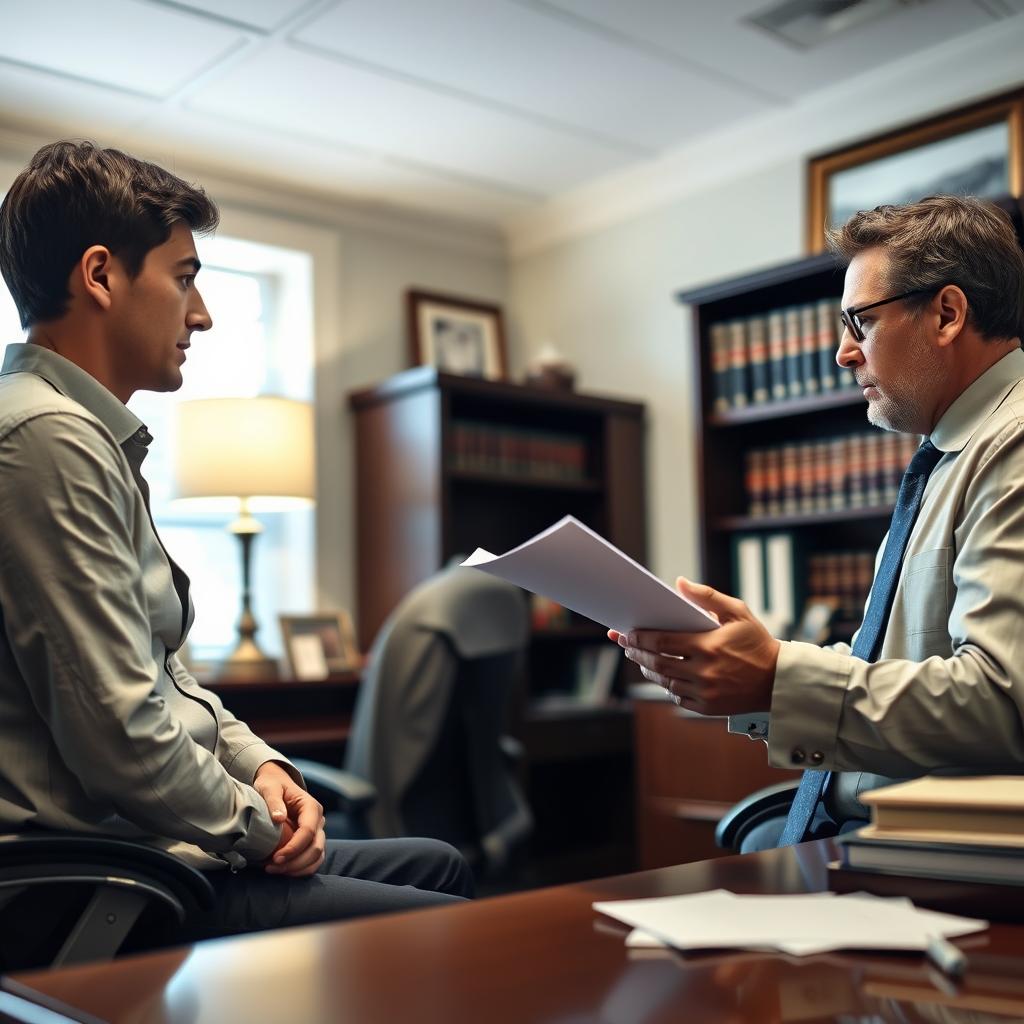
Breath Test Refusal Lawyer Falls Church, VA
When a driver is arrested for suspected DUI in Falls Church, Virginia, refusing a breath or blood test under Virginia’s implied consent law can trigger an administrative license suspension and, in some cases, criminal charges. Law Offices Of SRIS, P.C. Concentrates its traffic defense practice on protecting the driving privileges and records of clients facing breath test refusal allegations at the Falls Church General District Court, located at 300 Park Avenue, Suite 151W. Mr. Sris and his Of Counsel have documented 17 favorable outcomes in Falls Church traffic matters, including 3 dismissals and 14 charge amendments. Results may vary. For a consultation about a breath test refusal matter in Falls Church, reach the firm at (888) 437-7747. Law Offices Of SRIS, P.C. – Advocacy Without Borders.
What Breath Test Refusal Means in Falls Church, Virginia
Virginia’s implied consent statute, Va. Code § 18.2-268.3, creates an administrative consequence for drivers who, after a lawful arrest for DUI under § 18.2-266, unreasonably refuse to submit to a breath or blood test. In Falls Church, this refusal is handled as a civil offense on a first occurrence and can escalate to criminal penalties for repeat refusals. Cases are heard at the Falls Church General District Court, which serves the Seventeenth Judicial District and sits within the City of Falls Church. The court is accessible via Route 7, I-66, and I-495, and the Fairfax Location of Law Offices Of SRIS, P.C. represents clients at this venue.
Falls Church is a compact independent city with its own court system, yet many drivers ticketed here are traveling on regional highways that pass through the city limits. A refusal charge often arises alongside a DUI prosecution, but it is procedurally distinct. The Virginia Department of Motor Vehicles will impose a license suspension upon a finding of an unreasonable refusal, and that suspension runs separately from any DUI sentence. Depending on the driver’s prior record and the circumstances of the traffic stop, the refusal can be challenged on procedural grounds such as whether the arrest was lawful, whether the officer properly advised the driver of the consequences of refusal, or whether there was a medical or physical inability to provide a sample. An experienced traffic attorney familiar with Falls Church court practices can evaluate each of these defenses.
How Mr. Sris and His Of Counsel Handle Breath Test Refusal Cases
Mr. Sris and his Of Counsel begin by examining the traffic stop and the administration of implied consent warnings. Under Virginia law, an officer must inform the driver that refusal will result in license suspension and that evidence of the refusal can be used against the driver in court. Any deviation from the required advisory can form the basis for a challenge. The firm also reviews whether the officer had reasonable suspicion to initiate the stop and probable cause to make a DUI arrest, because a refusal charge depends upon the lawfulness of the underlying detention.
In Falls Church General District Court, a breath test refusal matter is typically heard at a bench trial before a judge. The prosecution must prove by a preponderance of the evidence that the refusal was unreasonable. Mr. Sris and his Of Counsel present evidence and argument to contest that showing, which might include witness testimony, video footage, or documentation of a medical condition that precluded a valid test. If the court finds the refusal unreasonable, the attorneys can advocate for mitigation or, when appropriate, explore appellate review to the Circuit Court. Throughout the process, the team keeps clients informed and works to resolve the matter efficiently while safeguarding driving privileges.
About Mr. Sris and His Of Counsel Team
Mr. Sris, Owner and Founder of Law Offices Of SRIS, P.C., is a former prosecutor who has practiced since 1997. He is admitted in Virginia, Maryland, the District of Columbia, New Jersey, and New York, giving him a broad perspective on multi‑jurisdictional traffic defense. Mr. Sris testified before the Virginia House Courts of Justice Committee in support of 2019 HB 635 (chief patron Del. David Bulova). His Of Counsel, each with significant litigation experience, collaborate on Falls Church breath test refusal cases. Mr. Sris and his Of Counsel bring over 120 years of combined legal experience, backed by 4,739+ documented firm-wide results. Results may vary.
Frequently Asked Questions
How does a Virginia lawyer defend against breath test refusal charges?
A defense against a breath test refusal in Falls Church often begins with challenging the lawfulness of the traffic stop or the adequacy of the implied consent warnings. If the officer lacked reasonable suspicion or probable cause, the refusal may be deemed not unreasonable. Additionally, a medical or physical condition that made it impossible to provide a breath sample can be raised. An experienced attorney evaluates police reports, dashcam footage, and the specific advisements given at the roadside. Falls Church General District Court is the venue for these hearings, and local procedural practices can shape the defense strategy. For example, an attorney familiar with the judge’s expectations may present a driver improvement clinic certificate as a mitigating factor.
What should I do if I am facing breath test refusal charges in Falls Church?
If you are charged with a breath test refusal in Falls Church, contact a traffic attorney right away and do not discuss the details of your case with anyone except your lawyer. Preserve any documents you received from the police, including the summons and the notice of suspension. Because the DMV administrative suspension timeline begins quickly, prompt action is important. You should also avoid driving on a suspended license, as that creates additional legal exposure under Va. Code § 46.2-301. A lawyer can represent you at both the DMV hearing and the General District Court and can work to protect your driving record.
What are the penalties for breath test refusal in Virginia?
A first‑offense breath test refusal in Virginia results in a one‑year administrative license suspension and does not carry criminal penalties by itself, while repeat refusals can lead to misdemeanor charges. The suspension is imposed by the Virginia DMV independent of any DUI prosecution, and there is no restricted license eligibility during the suspension period. A second refusal within ten years is a Class 2 misdemeanor, and a third or subsequent refusal is a Class 1 misdemeanor. The specifics of the penalty depend on the driver’s prior record and the circumstances of the stop. Because a refusal can also be used as evidence of consciousness of guilt in a related DUI case, it is essential to address the refusal charge proactively.
Do I need a lawyer for a breath test refusal in Falls Church?
Although you are not required to have an attorney for a breath test refusal hearing, legal representation is strongly advisable to protect your license and to avoid collateral consequences. The refusal suspension can affect your employment, your insurance rates, and your driving privileges for an extended period. An attorney can challenge the grounds of the refusal and, when appropriate, negotiate with the Commonwealth’s Attorney to resolve the matter favorably. Falls Church General District Court follows Virginia procedural rules that can be difficult to navigate without counsel. Representation by a lawyer familiar with that court increases the likelihood of a positive outcome.
What happens at a breath test refusal hearing in Falls Church General District Court?
At a Falls Church breath test refusal hearing, a General District Court judge hears evidence from the prosecution and the defense before deciding whether the refusal was unreasonable. The proceeding is a bench trial; there is no jury. The officer who requested the test will often testify about the traffic stop and the sequence of events. The defense may cross‑examine the officer, introduce witnesses, and present exhibits. If the court finds the refusal was unreasonable, the judge will confirm the license suspension and may also consider any related DUI charge. An appeal to the Circuit Court is available if the outcome is unfavorable.
Primary sources: Virginia Code Title 18.2 • Virginia Courts
Attorney advertising. Prior results do not guarantee a similar outcome.
Results may vary.
Case results depend on a variety of factors unique to each case.