
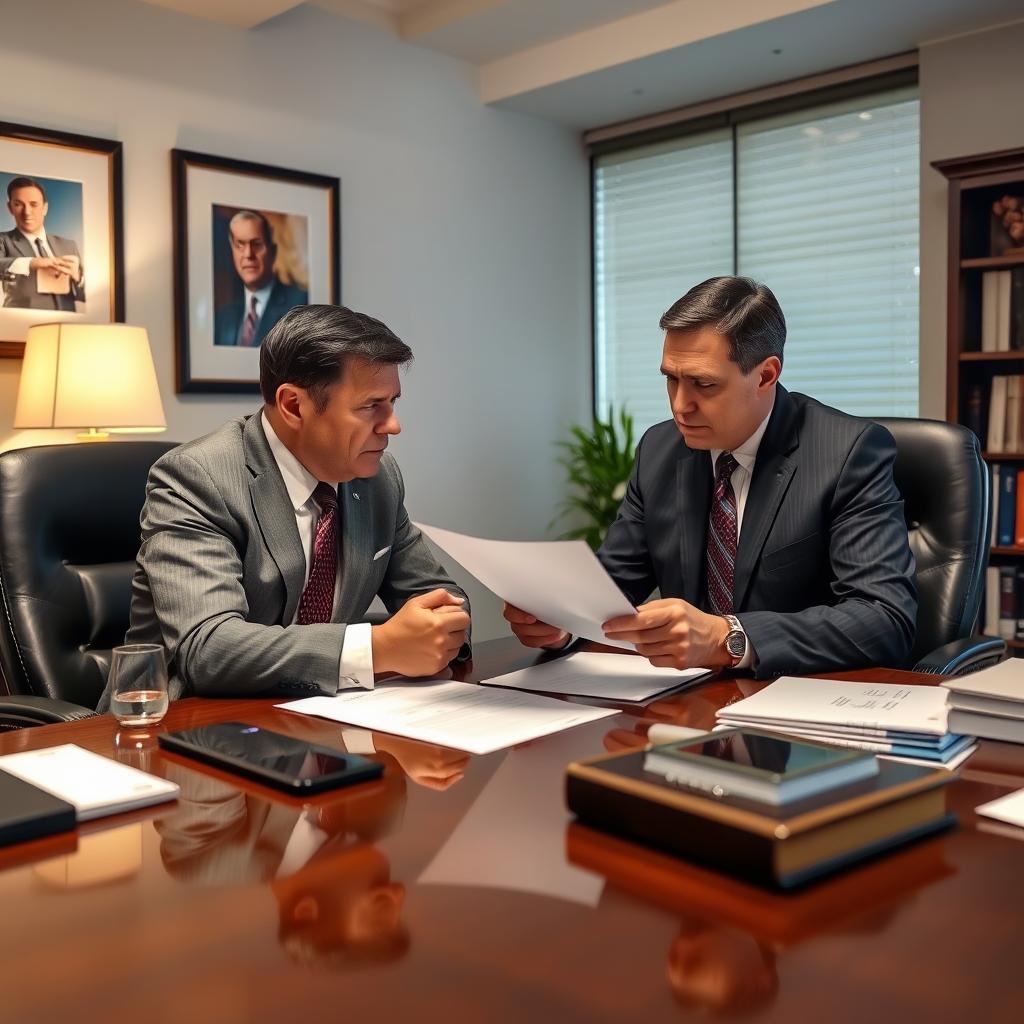
Refusal Lawyer Chesapeake, VA
You are driving on I-64 through Chesapeake, Virginia, when a state trooper pulls you over for a traffic infraction. After a brief investigation, the officer asks you to submit to a breath test. You hesitate. You refuse. Within minutes, you are facing a refusal charge under Virginia’s implied consent law, Va. Code § 18.2-268.3. A refusal charge in Chesapeake is serious — even for a first offense, it triggers a mandatory one-year license suspension and the potential for escalating criminal penalties if you face a second or third charge within ten years. You need an experienced traffic lawyer who understands how refusal cases are handled at the Chesapeake General District Court and who can build a strategic defense against the charge. Mr. Sris and his Of Counsel at Law Offices Of SRIS, P.C. bring over 120 years of combined legal experience to refusal defense in Chesapeake. Results may vary. Reach our location at (888) 437-7747 to schedule a consultation.
How Mr. Sris and His Of Counsel Approach Refusal Defense in Chesapeake
Every refusal case begins with a careful analysis of the traffic stop. Virginia law requires that the arresting officer have reasonable suspicion to conduct the stop and probable cause to request the breath test. If the stop was unlawful or if the officer failed to follow proper implied-consent procedures — such as reading the required admonishment or failing to provide a clear, timely opportunity to consent — the refusal charge may be challenged. Mr. Sris and his Of Counsel examine the police report, dashcam footage, and breathalyzer calibration logs to identify procedural missteps. In Chesapeake, the refusal hearing is a civil or criminal proceeding depending on whether it is a first, second, or third offense. The Richmond location of Law Offices Of SRIS, P.C. Regularly represents clients at the Chesapeake General District Court. We leverage a thorough understanding of how judges in the First Judicial District evaluate refusal evidence and what Commonwealth’s Attorneys typically require to consider a favorable resolution.
The firm’s Of Counsel team includes a former Maryland prosecutor and a former Virginia State Trooper — professionals who have personally conducted traffic stops, administered field sobriety tests, and prosecuted refusal cases. This dual perspective allows the defense to anticipate the other side’s arguments and to cross-examine officers effectively. While every case is unique, a thorough, evidence-focused strategy often leads to reduced penalties or a dismissal. Mr. Sris and his Of Counsel work to achieve a favorable outcome for every client. Results may vary.
What to Expect When Facing a Refusal Charge in Chesapeake
If you have been charged with refusal in Chesapeake, your case will be heard at the Chesapeake General District Court. The address is 307 Albemarle Drive, Chesapeake, VA 23322. The court hears refusal cases on its regular docket; the timeline depends on the court’s calendar and the complexity of the matter. In a first-offense civil refusal case, you are not facing jail time, but the administrative license suspension is automatic if the judge finds the refusal unreasonable. The Virginia Department of Motor Vehicles will suspend your driving privilege for one year, and there is no restricted license available for refusal. This means you cannot drive to work, school, or medical appointments unless you secure alternative transportation.
For a second refusal within ten years, the charge becomes a Class 2 misdemeanor, carrying up to six months in jail and a $1,000 fine upon conviction, in addition to a three-year license suspension. A third refusal within ten years is a Class 1 misdemeanor, punishable by up to twelve months in jail and a $2,500 fine, plus a three-year license suspension. The criminal classification escalates quickly. Mr. Sris and his Of Counsel help clients understand these penalties and craft a defense aimed at avoiding a finding of unreasonable refusal entirely. In many cases, the defense focuses on whether the officer’s request was clear, whether the driver’s refusal was actually a reasonable misunderstanding, or whether medical or language barriers account for the response.
Penalty Overview for Refusal Under Virginia Law
Virginia treats breath test refusal seriously. Under Va. Code § 18.2-268.3, any person arrested for driving under the influence is deemed to have impliedly consented to chemical testing. An unreasonable refusal triggers a civil administrative penalty on the first offense: a one-year license suspension, with no possibility of a restricted license. There is no jail time for a first-offense civil refusal, but the loss of driving privileges can be devastating. A second offense within ten years is graded as a Class 2 misdemeanor, punishable by up to six months in jail, a fine of up to $1,000, and a three-year license suspension. A third offense within ten years is a Class 1 misdemeanor, carrying up to twelve months in jail, a fine of up to $2,500, and a three-year license suspension. The criminal convictions also result in a permanent criminal record and may affect employment, security clearances, and professional licenses.
Plea bargaining is permitted under Rule 3A:8 of the Rules of the Supreme Court of Virginia; the Commonwealth’s Attorney and defense counsel may negotiate a plea agreement, which the court may accept or reject. An experienced attorney at the Chesapeake General District Court can negotiate with the prosecutor and present mitigating evidence — such as completion of a driver improvement program or evidence that the refusal was not willful — to secure a favorable outcome. in handling refusal matters at this court, documented results in Chesapeake include 1 dismissal / not-guilty finding and 4 reductions or amendments — favorable outcomes in all reported instances. Results may vary.
About Mr. Sris and His Of Counsel Team
Mr. Sris, Owner and Founder of Law Offices Of SRIS, P.C., is a former prosecutor who has practiced law since 1997. He is admitted in Virginia, Maryland, the District of Columbia, New Jersey, and New York. Mr. Sris testified before the Virginia House Courts of Justice Committee in support of 2019 HB 635 (chief patron Del. David Bulova). His Of Counsel team includes attorneys with decades of combined courtroom experience — a former Maryland Assistant State’s Attorney who prosecuted cases in both District and Circuit Courts, and a former Virginia State Trooper who served fifteen years in law enforcement before becoming an attorney. This dual insight — from the prosecution table and from the patrol car — provides a distinctive advantage when challenging refusal charges. Over 120 years of combined legal experience between Mr. Sris and his Of Counsel is brought to bear on every Chesapeake refusal case. Results may vary.
Frequently Asked Questions
Is refusal to take a breath test a criminal offense in Virginia?
Yes, a refusal can be a criminal offense depending on your prior record. Under Va. Code § 18.2-268.3, a first-offense refusal is a civil violation that results in a one-year license suspension. A second refusal within ten years is a Class 2 misdemeanor, punishable by up to six months in jail. A third refusal within ten years is a Class 1 misdemeanor, carrying up to twelve months in jail and a $2,500 fine. The criminal convictions also create a permanent criminal record. If you are facing a refusal charge in Chesapeake, you should speak with an attorney promptly to understand your specific exposure.
What happens at a refusal hearing in Chesapeake General District Court?
At a refusal hearing, the judge determines whether your refusal was unreasonable. The Commonwealth’s Attorney must prove that the officer had reasonable suspicion to stop you and probable cause to request the breath test, and that you clearly refused to submit. If the refusal is found unreasonable for a first offense, the court will notify DMV, which imposes a one-year suspension. For criminal refusal, the case proceeds as a misdemeanor trial with potential jail time. The hearing takes place at 307 Albemarle Drive, Chesapeake, VA 23322. For guidance on your specific situation, reach Law Offices Of SRIS, P.C. at (888) 437-7747.
Can I get a restricted license after a refusal suspension?
No, Virginia does not offer a restricted license for a refusal suspension. Unlike a DUI conviction, where a restricted license may be available after a portion of the suspension, a refusal-related suspension under Va. Code § 18.2-268.3 is absolute for the full period — one year for a first offense. There is no provision for driving to work, school, or medical appointments. For this reason, challenging a refusal charge effectively is critical. To discuss the details of your matter, contact Law Offices Of SRIS, P.C. at (888) 437-7747.
How can a lawyer defend against a refusal charge?
A defense may challenge the legality of the traffic stop, the officer’s probable cause, or the adequacy of the implied consent admonishment. If the officer lacked reasonable suspicion for the stop or did not properly advise you of the consequences of refusal under Virginia law, the refusal finding may be invalid. Additionally, evidence such as audio recordings, dashcam video, or medical records may demonstrate that your response was not a willful refusal but rather confusion, a medical condition, or a language barrier. For a consultation, reach Mr. Sris and his Of Counsel at (888) 437-7747.
What is the difference between a DUI and a refusal in Virginia?
A DUI is a charge for driving while intoxicated, while a refusal is a separate, independent charge for not submitting to a chemical test after arrest. You can be charged with DUI even if you refused the breath test, as the officer may rely on other evidence of impairment. A refusal charge is procedurally distinct: it arises from a violation of the implied consent statute, Va. Code § 18.2-268.3, and carries its own license suspension and potential criminal penalties. Defending both charges simultaneously requires a strategic approach — an experienced attorney can work to resolve both matters favorably. Results may vary.
Do I need a lawyer for a refusal charge in Chesapeake?
Yes, you should have a lawyer for any refusal charge because of the mandatory license suspension and escalating criminal consequences. Even a first-offense civil refusal results in a one-year suspension with no restricted license. If you have a prior refusal within ten years, the charge is a criminal misdemeanor with potential jail time. An attorney familiar with the Chesapeake General District Court can evaluate the stop, identify procedural defects, and advocate for a dismissal or reduction of the charge. For guidance on your specific situation, reach Law Offices Of SRIS, P.C. at (888) 437-7747.
How long does a refusal case take in Chesapeake?
The timeline varies depending on court scheduling and the complexity of the case. Typically, the first hearing is set within a few weeks to a few months after the charge. If the matter is contested and requires a full evidentiary hearing, the process may take longer. Some cases resolve at the first appearance through negotiation or a finding of not unreasonable refusal. Mr. Sris and his Of Counsel work to move cases efficiently while ensuring a thorough defense. To discuss the details of your matter, contact Law Offices Of SRIS, P.C. at (888) 437-7747.
Can a refusal charge be dismissed completely?
Yes, a refusal charge can be dismissed if the prosecution cannot prove an unreasonable refusal, or if procedural errors warrant dismissal. In Chesapeake, documented outcomes for refusal cases include at least one dismissal and several reductions to lesser charges or outcomes. A defense may succeed by showing that the officer failed to comply with implied consent procedures, or that the defendant’s response was not a knowing refusal. Every case is fact-specific. Results may vary.
What should I do immediately after being charged with refusal?
Preserve all documentation from the stop and contact an experienced traffic defense attorney. Write down everything you remember about the encounter — what the officer said, what you said, and any witnesses. Obtain a copy of the summons or ticket. Do not discuss the facts of your case with anyone other than your attorney. A prompt consultation allows the attorney to begin preserving evidence and evaluating defense strategies before the first court date. For a consultation, reach Mr. Sris and his Of Counsel at (888) 437-7747.
Will a refusal charge affect my out-of-state driver’s license?
Yes, Virginia reports refusal convictions to the driver’s home state under the Driver License Compact. Most states treat an out-of-state refusal similarly to an in-state offense and will impose their own license suspension or points. If you hold a license from another state, it is especially important to fight the refusal charge in Virginia to avoid a domino effect on your driving record. Mr. Sris and his Of Counsel have extensive experience representing out-of-state drivers in Virginia courts.
Explore related legal services: Fairfax County traffic lawyer, Fairfax City traffic lawyer, Falls Church traffic lawyer, Prince William County traffic lawyer, Manassas traffic lawyer.
Primary sources: Va. Code § 18.2-268.3 (implied consent) • Chesapeake General District Court.
Our Richmond location: 7400 Beaufont Springs Drive, Suite 300, Room 395, Richmond, VA 23225. By appointment only. Call (888) 437-7747.
Attorney advertising. Prior results do not guarantee a similar outcome. Case results depend on a variety of factors unique to each case. Results may vary.